Wild dogs
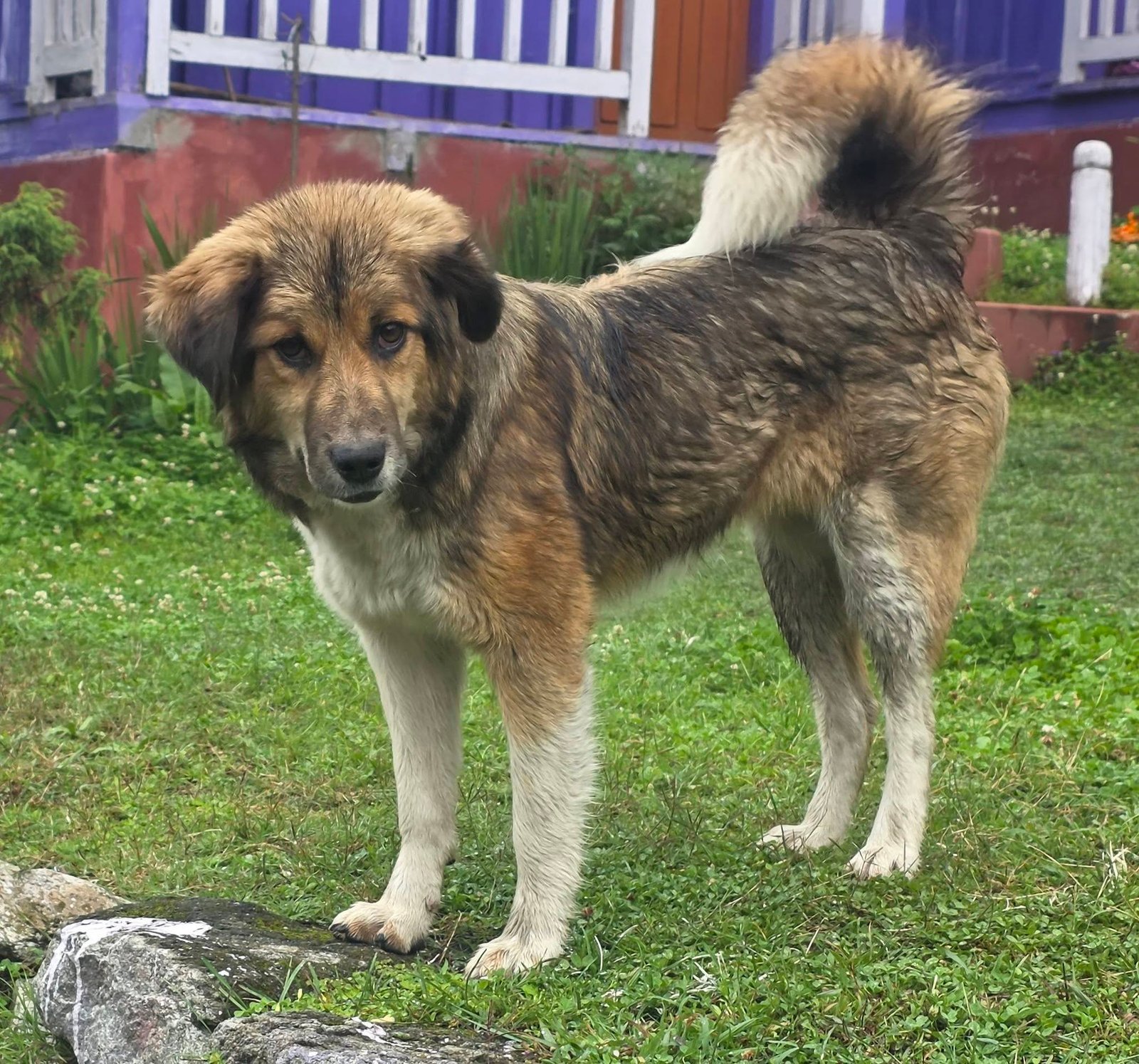
Most dogs you meet on the trail are perfectly friendly — genuinely, the majority just want a
sniff and to be on their way. But there are exceptions, and it pays to be ready for them rather
than caught out. If one charges, you need to be prepared to stand your ground; it's not
something I love doing, but a tap with a stick if one's genuinely coming at you is sometimes
what it takes. Chame, on the Annapurna Circuit, has a
reputation for this — worth being extra alert there.
A few things that help: keep your dog on a lead through villages, and always carry a stick,
even if you never need to swing it. Bending down as if you're picking up a stone is usually
enough on its own — most dogs have learned what that means and back off before you've even
found one. If your dog's small, picking them up removes the problem instantly. For what it's
worth, I've never seen these dogs go for a person — it's your dog they're reacting to, not you.
So: most dogs are lovely, but go in ready to defend yours if it comes to it.
Altitude
It's not just people who can get altitude sickness — dogs can too, and because they can't tell
you how they're feeling, it's on you to watch for it. Go up slowly, keep an eye out for
symptoms as you climb higher, and if your dog starts acting strange — unusually lethargic, off
their food, unsteady on their feet — treat it the same way you would in a person: head back
down.
Cattle
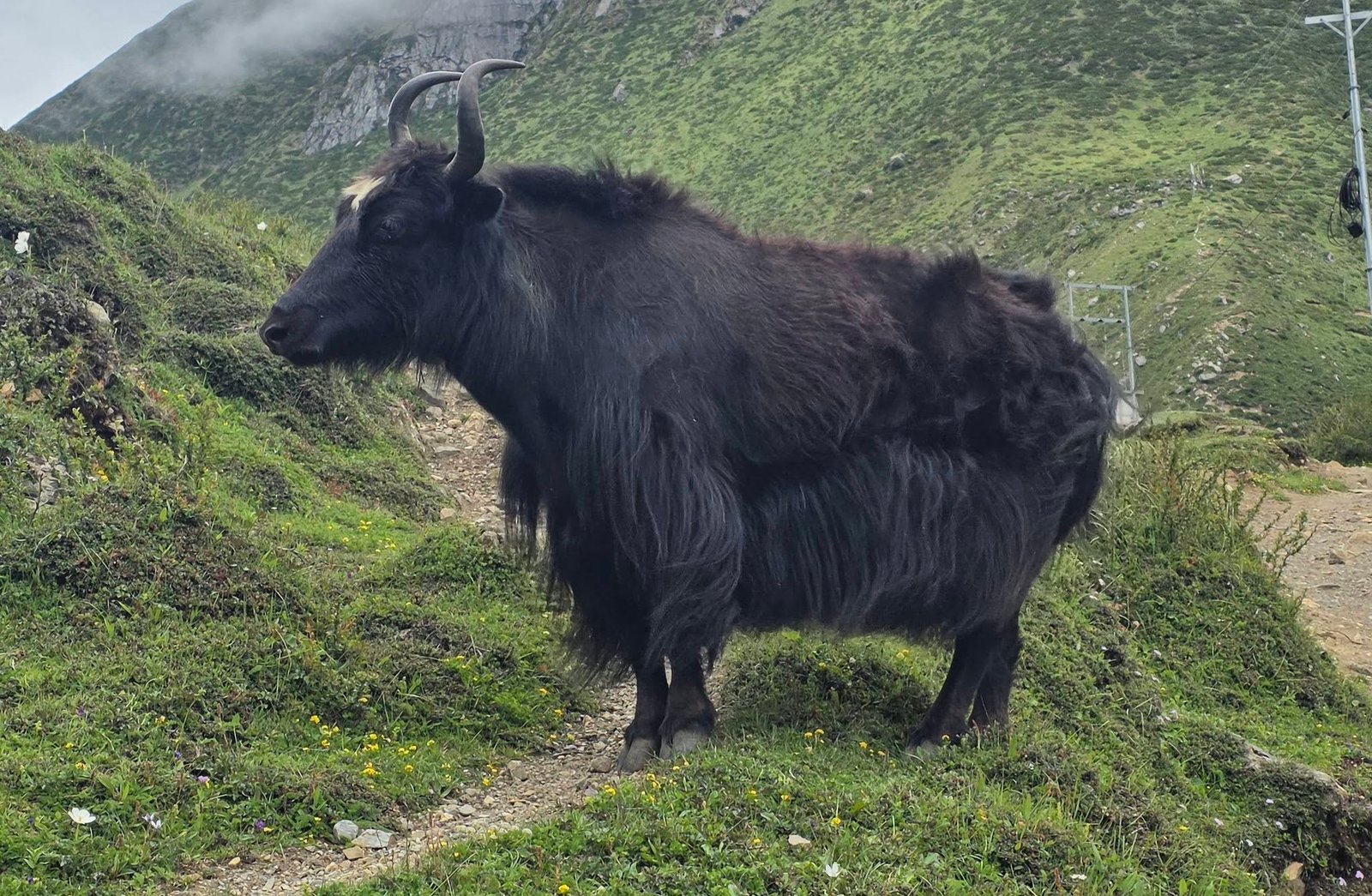
Yaks, cows, and the various crosses between them are generally unbothered by dogs, though they
can get curious, and a bit of shooing usually sorts that out. The one to watch for is anything
with a calf nearby. Get too close with a dog and a protective mother can charge — waving your
arms, shouting, and making yourself big will usually see her off, but it's always better to go
around if there's a route that allows it. If there isn't, send someone ahead with a stick to
clear the path and move the animals off before bringing the dogs through.
Horses
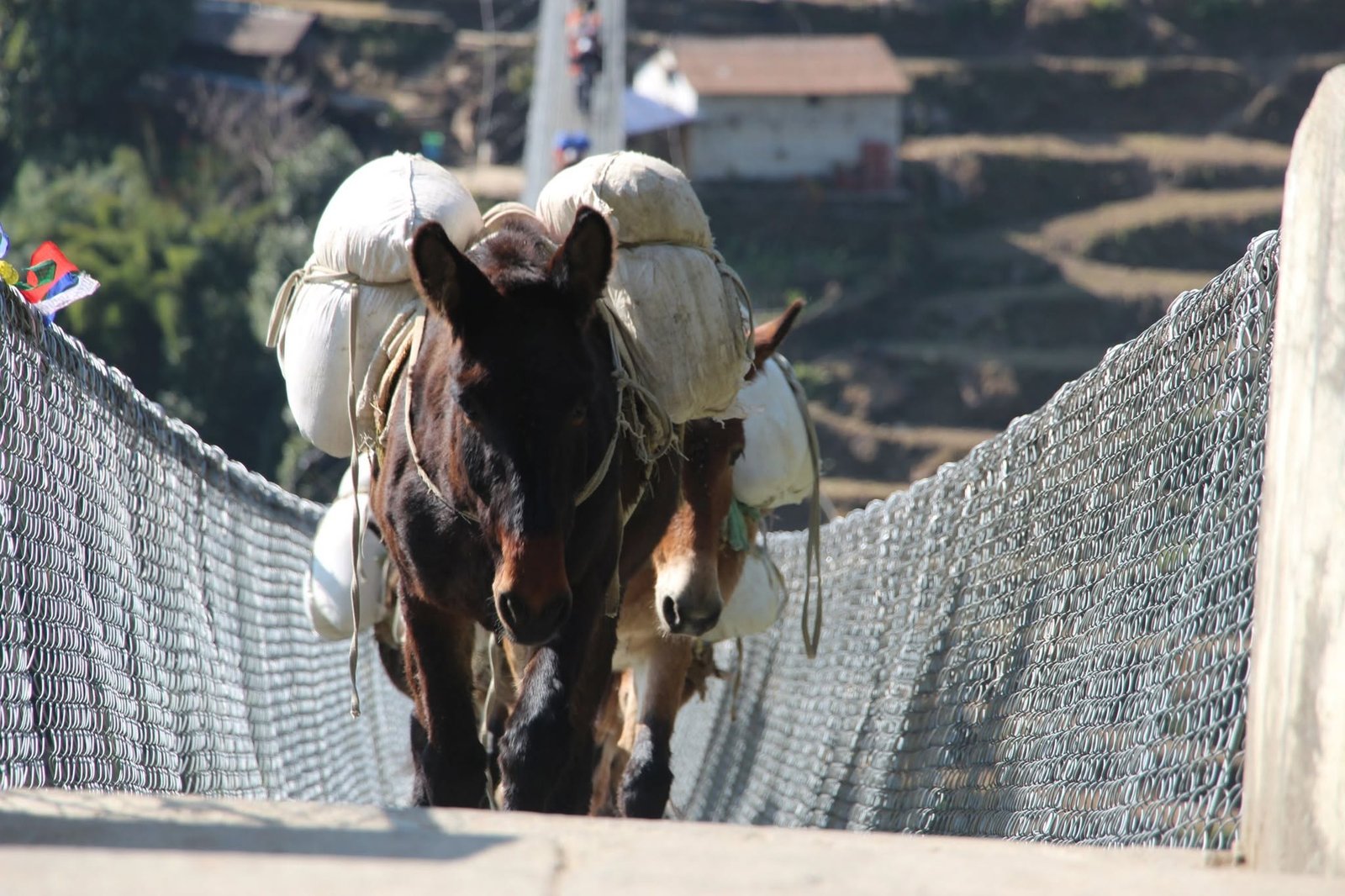
Plenty of villages are supplied by trains of horses and donkeys, and you'll meet them coming
the other way on narrow trail. As soon as you spot one, get your dog on a lead and behind you,
then step off the path yourself. One rule matters more than people realise: stand on the side
away from the drop. Horses are known for knocking people off the edge of a trail — not out of
malice, just because they're carrying loads and not always paying attention to what's beside
them.
Other wild animals
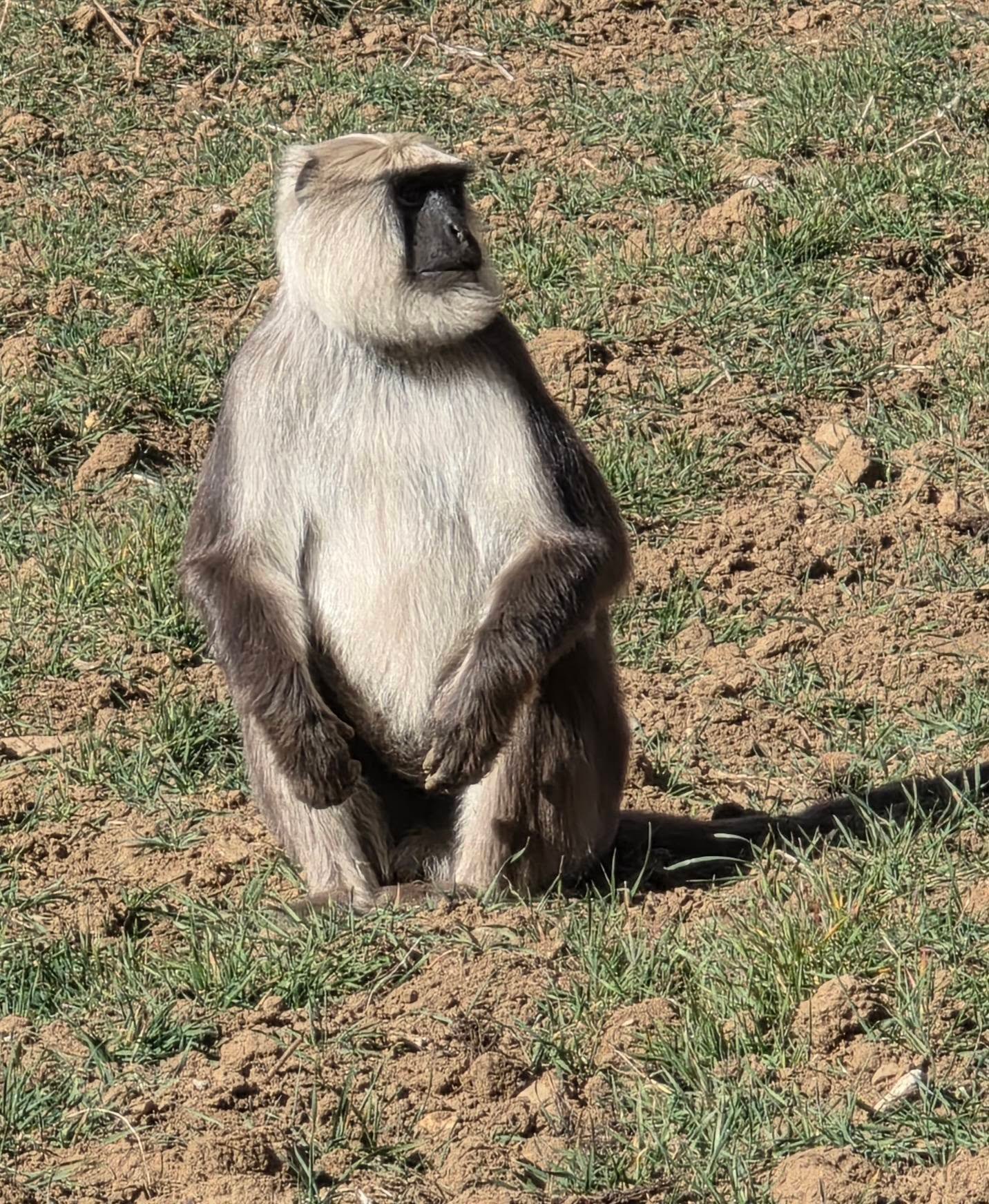
There are leopards and bears in these hills, but they're shy of people and you're very unlikely
to see one. The rule that actually matters here is simpler: never walk in the dark, even for
the 3am starts people love doing to catch a sunrise somewhere. Smaller wildlife is more likely
to cause you bother — marmots, pika, deer — and some dogs simply cannot resist a chase. If
yours is one of them, keep them on a lead whenever you're near open ground.
Blisters, thorns and stings
A dog's paws take a real battering on rocky trail, so it's worth planning your route around
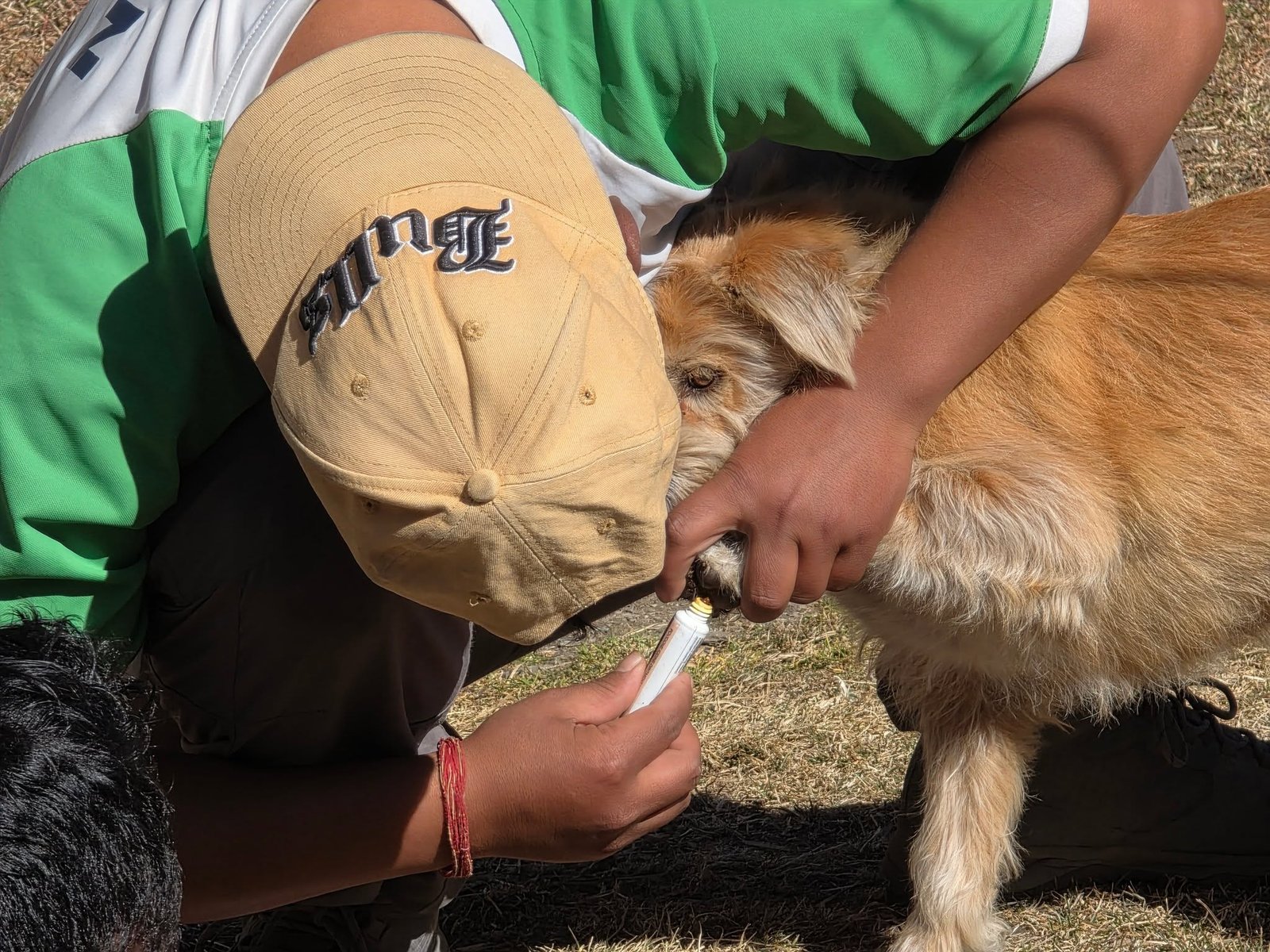
them, not just your own feet. Carry antibacterial cream, tweezers, and blister plasters, and
consider a pair of small dog socks — mine noticeably help once paws start getting sore. Build
in rest days if you need them, and have a backup plan; if your dog is small enough, carrying
them for a stretch is always an option.
Weather
Nepal's trekking routes swing between very hot days and genuinely cold nights, sometimes within
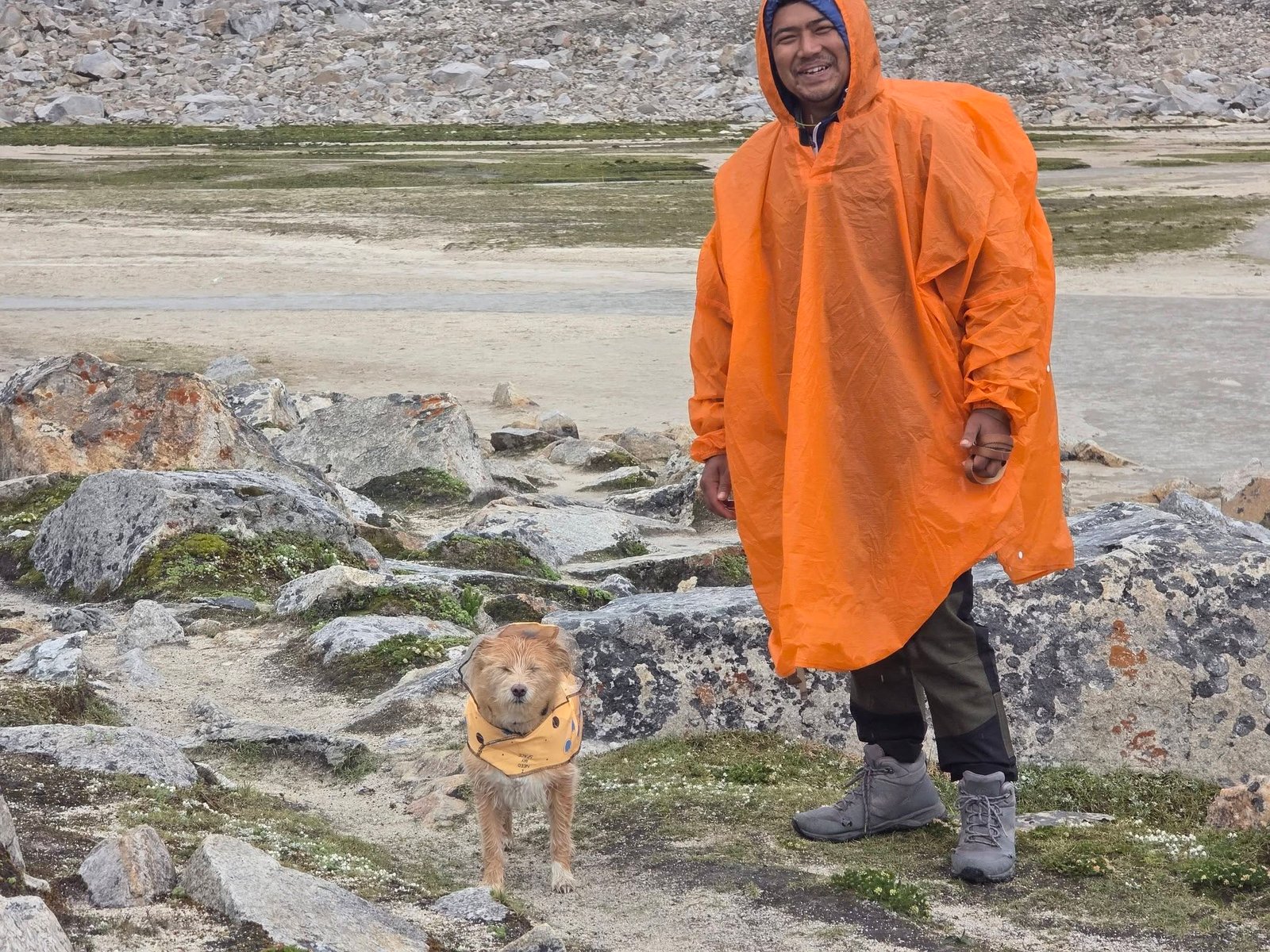
the same 24 hours. If you're travelling in a cooler season, pack a jacket for your dog and
consider a rain coat for sudden storms. On hot days, carry extra water and shorten your walking
hours where you can.
Leeches
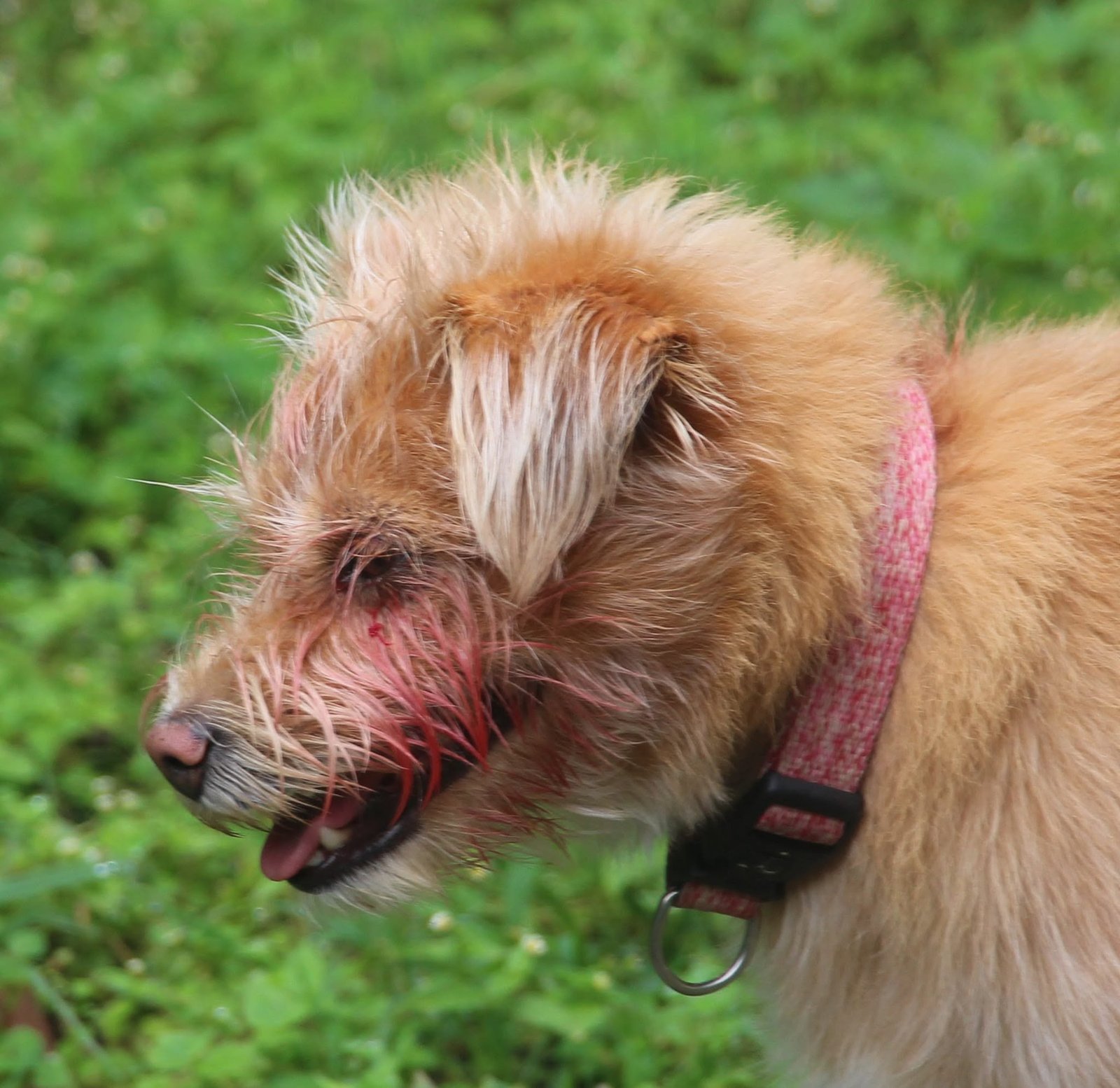
Monsoon season brings out the leeches, and dogs — being lower to the ground and generally more
interested in the grass — tend to pick up more than people do. Carry salt and tip a little onto
a leech to make it let go on its own; resist the urge to just pull it off, as the head can stay
stuck in. Treat any bite with antibacterial cream afterwards.